

Why this topic matters
This topic matters because it helps farmers, advisors and field teams understand a signal before turning it into an operational decision. The goal is simple: read the context, compare it with field reality and decide what deserves attention.
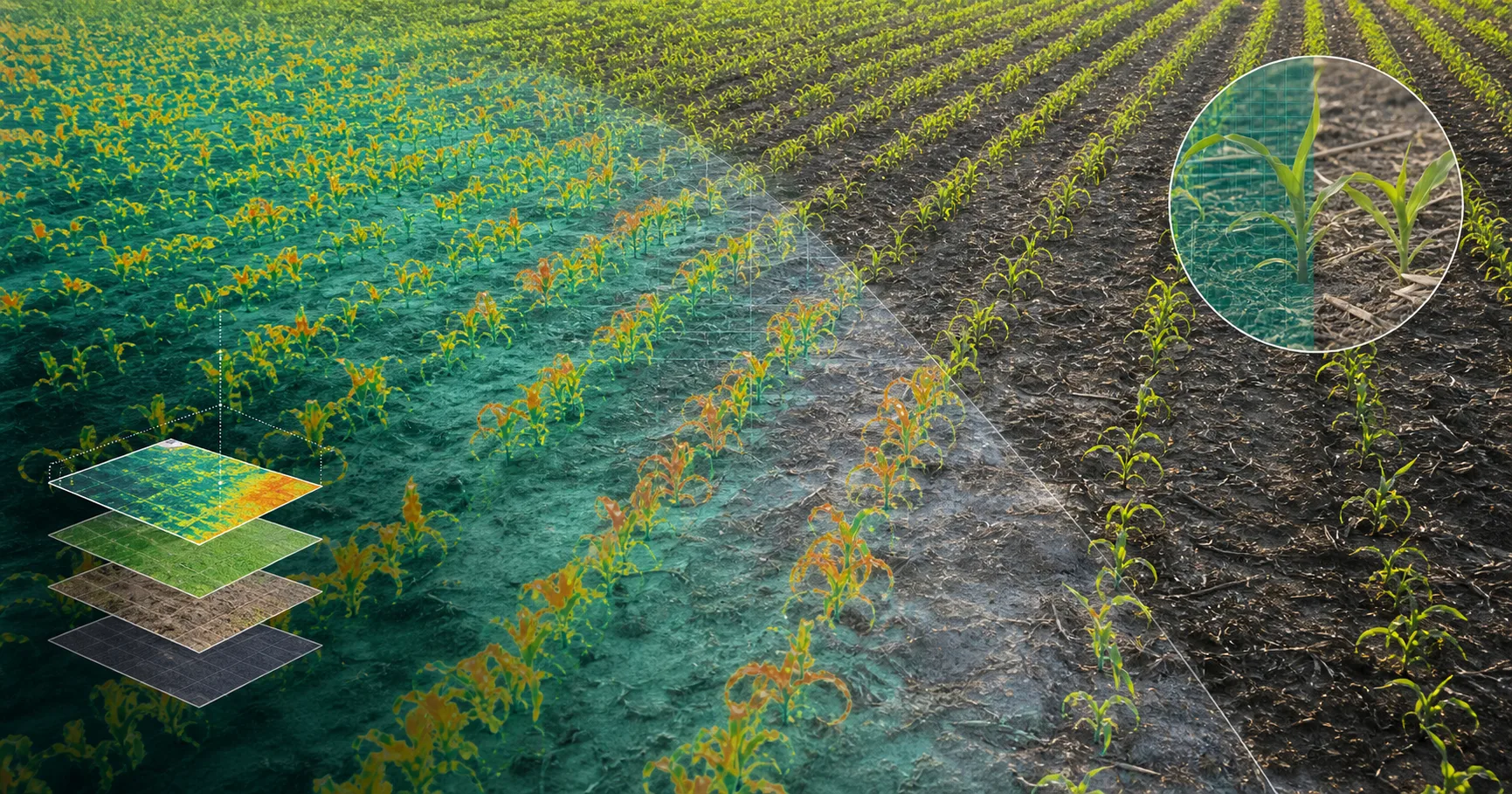
Why soil-adjusted vegetation indices help when bare soil influences early crop monitoring. In practical terms, SAVI and OSAVI should be read as context for better decisions, not as a diagnosis by itself. They reduce part of the soil background influence when vegetation cover is low.
What the user should look at
| Signal | What it helps interpret |
|---|---|
| visible soil between rows | They reduce part of the soil background influence when vegetation cover is low. |
| early emergence | They reduce part of the soil background influence when vegetation cover is low. |
| soil brightness differences | They reduce part of the soil background influence when vegetation cover is low. |
| comparison with NDVI | They reduce part of the soil background influence when vegetation cover is low. |
| stand establishment problems | They reduce part of the soil background influence when vegetation cover is low. |
How to interpret it without overclaiming
The safest interpretation is comparative: look at the same field over time, compare similar zones, and validate the hypothesis in the field before turning a map into an instruction.
| Field question | Why it matters |
|---|---|
| Is the crop too young for NDVI alone? | They reduce part of the soil background influence when vegetation cover is low. |
| Is soil brightness driving the pattern? | They reduce part of the soil background influence when vegetation cover is low. |
| Does field counting confirm emergence issues? | They reduce part of the soil background influence when vegetation cover is low. |
A practical workflow
- Identify the parcel and crop stage.
- Review the most recent map or operational record.
- Compare with previous dates and recent work.
- Check weather, irrigation, inventory or field observations.
- Create an inspection or task only when the signal is relevant.
- Close the loop with photos, notes and a decision.
Common mistakes
- Do not treat one color or one value as a diagnosis.
- Do not compare different crops without context.
- Do not ignore sensor limits, timing or data quality.
- Do not turn a signal into an automatic treatment.
- Always keep agronomic judgment and local validation in the loop.
In summary
SAVI and OSAVI: indices for young crops and visible soil is most useful when it helps the team ask better questions, prioritize field checks and document what was found. The public value is interpretation: understand the signal, compare it with context, and confirm the decision in the field.